Gender based violence in South Africa is a national crisis, and it doesn’t start with a punch. It often starts with subtle emotional, verbal and financial abuse at home. This article explores the stats, the psychology behind abuse, early warning signs, and where women can find help before things turn deadly.
(Content note: This article talks about abuse, femicide and trauma. Please read gently, and skip or pause if it feels too heavy.)
How Bad is Gender Based Violence in South Africa?
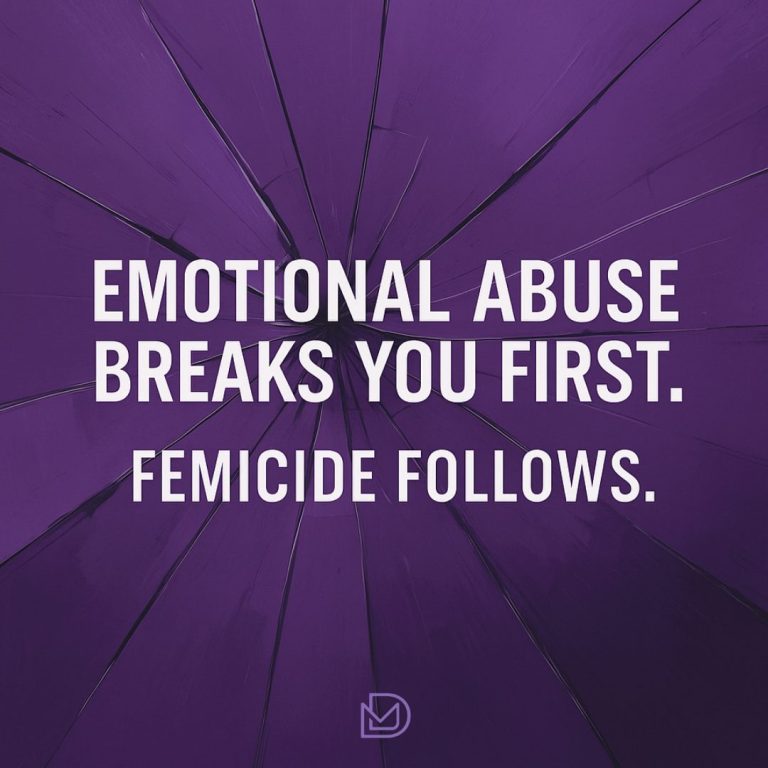
Gender based violence (GBV) and femicide in South Africa are not abstract issues – they are a daily reality.
Recent crime data shows:
- A statement in June 2025 puts the femicide rate at 11 women murdered every day – about one every two hours. (ACDP)
- South Africa has one of the highest femicide rates in the world. Intimate partner femicide has been estimated at around 5.5 women killed per 100 000 women (2020–2021), far higher than the global average. (UN Women)
- Globally, the UN estimates that around 140 women and girls are killed every day by a partner or family member – and Africa has the highest rate of intimate partner/family-related femicide. South Africa is one of the countries where many of the women killed had previously reported violence. (The Guardian)
For Many Women and Girls, Home is the Most Dangerous Place to be
And yet, most women who are living with an abusive partner don’t picture themselves as “that kind of woman” – the type they see in campaigns or in news headlines. They don’t fit the “stereotype” to be a Gender Based Violence victim.
They believe:
- “That will never be me.”
- “I’m too strong to let a man treat me like that.”
- “If he ever hit me, I’d leave immediately.”
- “I’m not the ‘kind of woman’ to be attracted to abusive men.”
The truth is far more complicated – and far more sinister. Abuse usually starts long before the first hit. When we think about Gender Based Violence, we often imagine bruises, broken bones and hospital visits.
But most abusive relationships begin in ways that are invisible from the outside and easy to rationalise from the inside.
Emotional and verbal abuse can include:
- Constant criticism, put-downs and insults
- Humiliating you in front of others, including in jokes
- Blaming you for their anger, stress, drinking or outbursts
- Calling you “crazy” or “dramatic” when you get upset
- Threatening to leave, hurt themselves, hurt you or take the children if you don’t obey
International research shows that emotional and verbal abuse can have psychological effects that are just as serious as physical abuse, and it is often a warning sign that physical violence may follow. (Office on Women’s Health)
Other Forms of Home-Based Abuse that are Just as Harmful
Financial Abuse can Include:
- Controlling all the money, forcing you to ask for every cent
- Taking your salary, blocking your access to bank accounts
- Sabotaging your ability to work or study
- Dumping debt in your name
Studies suggest financial abuse is present in nearly all domestic violence situations and is one of the strongest tools abusers use to trap women. (NNEDV)
Coercive Control can Include:
- Monitoring your phone, social media and movements
- Isolating you from friends and family
- Dictating what you wear, where you go, who you see
- Creating a constant sense of walking on eggshells
None of this leaves bruises – but it does something even more dangerous: it re-shapes how a woman sees herself, her worth and her options. Making her the prime target for Gender Based Violence.
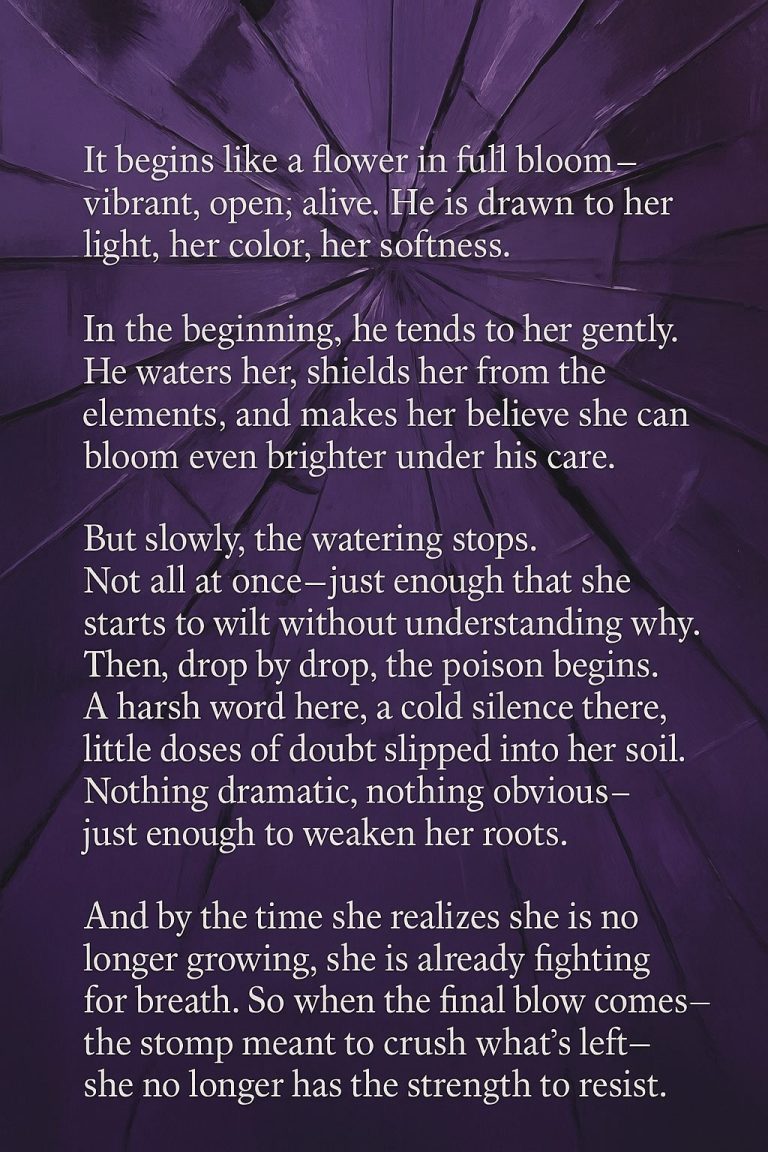
Some of the Psychology that Keeps Women Stuck
- Slow Erosion of Self-Worth
At the beginning, he may be charming, attentive and affectionate. The criticism and control creep in slowly: one comment here, one “joke” there, one “bad day” where he shouts. Over time, the constant negativity wears her down. She starts to believe she really is the problem. - Hope and the “Honeymoon Phase”
Many abusive relationships follow a cycle:
Tension building → explosion (abuse) → apologies and gifts → calm.
After each blow-up, he may cry, apologise, promise to change, talk about his trauma, or swear it will “never happen again”. That hopeful part of her – the part that fell in love – clings to the good days and wants to believe him. - Fear and Realistic Danger
Leaving an abusive partner is statistically one of the most dangerous moments for a woman. Threats like “If you ever leave me, I’ll kill you” are not empty. With our femicide rates, many women are rightfully afraid that leaving could escalate the violence.
4. Shame and Secrecy
Abusers often look respectable from the outside. He might be well-liked, successful, charming with friends. She worries that no one will believe her or that people will blame her. Shame keeps many women silent – especially in communities where women are expected to “hold the family together” at any cost.
5. Practical Barriers
Children, shared finances, cultural expectations, lack of family support, fear of starting over and limited access to safe housing all play a role. For many women, the question is not simply “Should I leave?” – it’s “Will we survive if I do?”
When we begin to understand the psychology behind abuse, the question is no longer, “Why doesn’t she leave?” but rather, “Why is he allowed to keep hurting her—and how do we help her get out safely?”
It’s time to stop judging women who are trapped in abusive relationships and start placing responsibility where it truly belongs: on the person inflicting the harm.
Abuse is not a matter of weakness, education, confidence, or strength. It can happen to anyone.
Even you.
Women need to break the silence on abuse but they don’t because of shame and the judgment of others. Don’t be that person! Be the safe space for someone to share with you.
Warning Signs that Emotional Abuse may be Heading Towards Physical Violence
Some red flags that a relationship is becoming dangerous include:
- Your World gets Smaller
– You see fewer friends and family, because he gets moody or angry when you go out.
– You start hiding things from people to “keep the peace”. - You Feel Constantly on Edge
– You change your behaviour to avoid triggers: how you speak, what you wear, how you spend money.
– You feel anxious going home, never sure what version of him you will get. - He Controls your Resources
– He insists on handling all the money, checking your receipts, criticising your spending.
– He blocks your attempts to study, work or progress in your career, often under the excuse of “caring” for you. - He Minimises or Denies his Behaviour
– “You’re overreacting.”
– “If you didn’t push me, I wouldn’t get so angry.”
– “It was just a joke.”
– “I only shouted because I care.” - He uses Fear or Threats
– Punching walls, throwing objects, driving dangerously when angry.
– Threatening to hurt you, himself, the children or your pets. - Physical Contact Starts to Cross the Line
– Grabbing your arm too hard, blocking doorways, pushing, shaking, restraining you during arguments.
– “Accidental” harm that somehow keeps happening: a shove that “wasn’t that bad”, a slap he swears will “never happen again”.
Any one of these is serious. A pattern of several of them is a clear danger sign – even if he hasn’t hit you “properly” yet.
If you are reading this and recognising your situation, your feelings are valid. You don’t need bruises to justify asking for help.
What Women can do at Different Stages of the Cycle
Every situation is different and safety is always the first priority, but there are some general steps that can help.
When something feels “off”, but you’re not sure
- Trust your Gut
If you feel unsafe, controlled, belittled or constantly anxious around your partner, take that seriously – even if you can’t “prove” it. - Talk to Someone you Trust
Share your worries with a friend, family member, therapist, religious leader, colleague or support group. Sometimes, hearing your own story out loud makes it clearer. - Keep a Private Record
If it is safe to do so, write down incidents with dates, what happened and how you felt. This can help you see patterns – and may also be useful if you later seek a protection order or need evidence.
When Emotional or Financial Abuse is Clear
- Reach out to Specialist Organisations
South Africa has several organisations offering counselling, legal advice, shelter and safety planning for women facing abuse (see the help list below). Many offer free and confidential support. - Learn About your Legal Rights
Under South Africa’s Domestic Violence Act, you can apply for a protection order against an abusive partner, even if you are still living together and even if the abuse is not (yet) physical. The police and magistrates’ courts are obligated to help you through this process. - Start a Safety Plan
– Identify a safe place you could go in an emergency (friend, family, shelter).
– Prepare copies of important documents (ID, children’s birth certificates, medical cards, bank details).
– Keep some emergency cash or a small packed bag in a place only you know about, if you can do so safely.
If you are Being Threatened or Physically Harmed
- If you are in immediate danger, call:
• SAPS emergency: 10111
• GBV Command Centre: 0800 428 428 (SAPS) - If possible:
• Get to a safe place – a neighbour, friend, family member, police station or hospital.
• Ask the police to help you access a shelter or contact an NGO for support. (Government of South Africa)
• In cases of sexual violence, Thuthuzela Care Centres at certain hospitals provide medical care, forensic examinations, counselling and help with opening a case, in a more survivor-centred environment. (Government of South Africa)
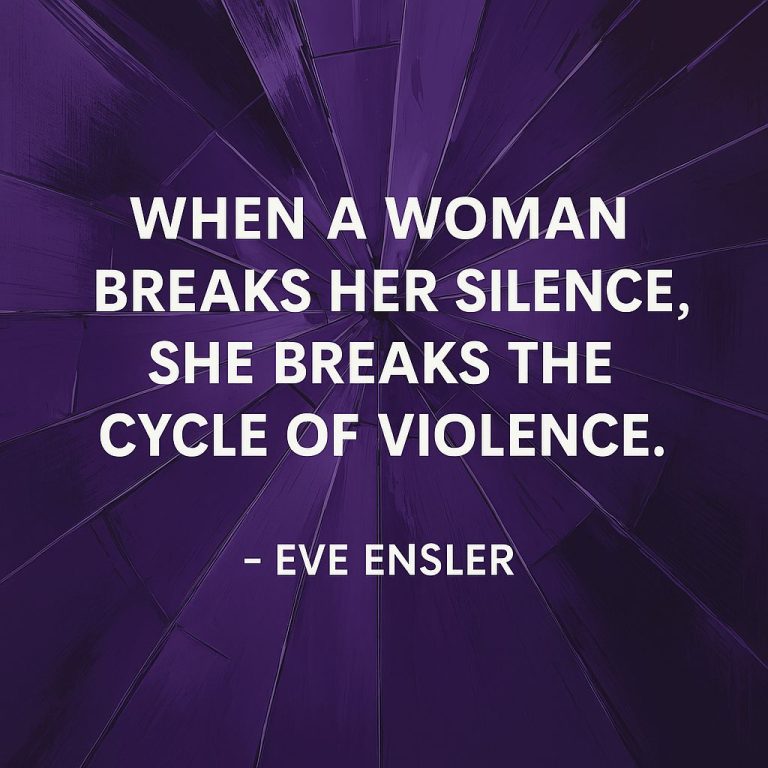
Where to Get Help in South Africa if You are Experiencing Gender Based Violence
You do not have to go through this alone. Some key resources include:
National Hotlines
- GBV Command Centre (24/7): 0800 428 428 (you can also find additional contact options via government and GBV partner sites) (Justice South Africa)
- National GBV helpline / Women Abuse Helpline: 0800 150 150 (Help UNHCR)
- SAPS emergency: 10111 (or 0860 10111) (SAPS)
- National Shelter Movement: 0800 001 005 (The Saartjie Baartman Centre)
- Childline (for children and teens): 116 (End GBVF)
Specialist Organisations
- TEARS Foundation – 24/7 support for domestic violence, sexual assault and child abuse.
– Free USSD/SMS help line: 1347355#
– Toll-free: 08000 TEARS / 08000 83277 (Tears)
- POWA (People Opposing Women Abuse) – counselling, legal support and shelters for abused women.
- Saartjie Baartman Centre for Women and Children – one-stop centre offering shelter and comprehensive services for women and children affected by GBV (based in the Western Cape, but a powerful resource and model).
- Thuthuzela Care Centres – specialised one-stop centres for survivors of rape and sexual offences, run in partnership with the NPA and NGOs at selected hospitals and clinics. (Government of South Africa)
If none of these numbers feel right, or you are not sure who to call, you can also speak to Lifeline, SADAG or other crisis lines listed on many national helpline pages. (Sonke Gender Justice)
Final Word on Gender Based Violence
Gender based violence in South Africa is not just about “other” women in headlines. It is about your colleague who makes excuses for her bruises, your neighbour whose husband is “just very strict”, your friend who has slowly disappeared from social life. It’s about you that feels worthless and ‘deserving’ of the treatment that you are receiving.
Abuse does not start with a broken bone. It starts with being broken down.
If you recognise yourself in any part of this article, please know:
You are NOT to blame.
You are NOT overreacting.
You are NOT weak.
And you are NOT alone.
Reaching out for help is not a betrayal of your family or your culture. It is an act of survival – and an act of courage that could save your life and the lives of your children. If you don’t have the strength to leave ‘for you’. Leave for your children.